Senate’s “One Big Beautiful Bill” Pushes Fiscal Boundaries in a High-Stakes Political Showdown
- Jun 29, 2025
- 3 min read
29 June 2025
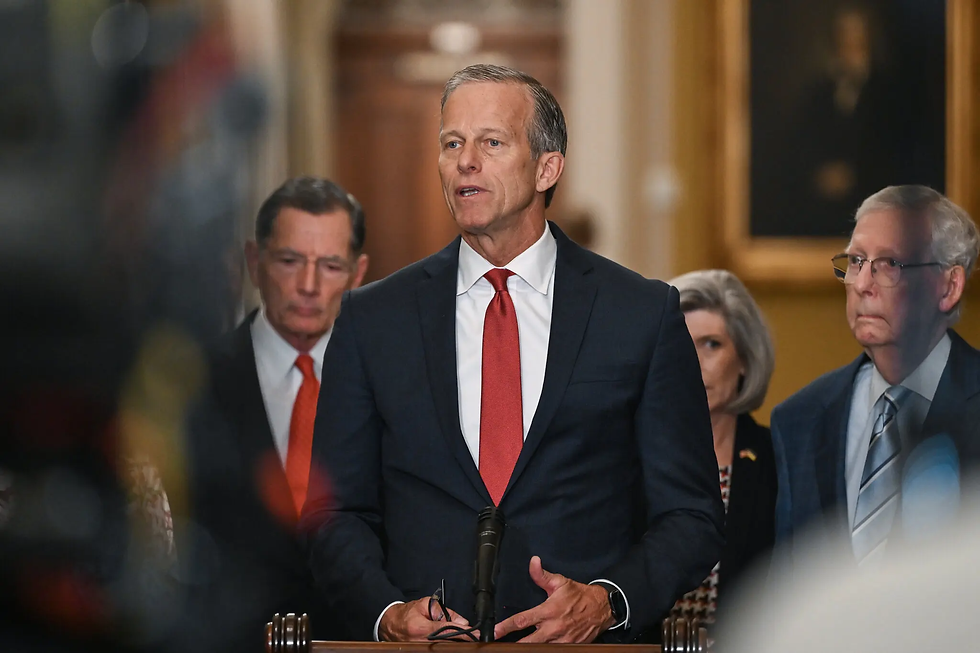
The U.S. Senate plunged headfirst into an epic legislative moment over the weekend, as Republican Senators narrowly advanced President Trump’s sweeping tax-cut and spending package. The 51‑49 procedural vote on Saturday opens the door to extended debate on a 940-page “One Big Beautiful Bill” officially titled the One Big Beautiful Bill Act, signaling a high-stakes gambit to fulfill campaign promises ahead of the July 4 deadline.
The legislation carries immense ambition: it permanently enshrines the much-debated 2017 tax cuts, introduces additional deductions like tax-free tips and overtime, and boosts military and border security spending. It's equally laden with controversial reforms rolling back Biden-era green-energy incentives, altering Medicaid funding formulas, and capping state and local tax (SALT) deductions at $40,000 (adjusted for inflation through 2029)
But the bill comes with a steep price tag. The Joint Tax Committee estimates it will slash federal revenue by a staggering $4.5 trillion over ten years. The nonpartisan Congressional Budget Office warns the final version could add between $3 trillion and $5 trillion to the national debt risks that raise questions about long-term economic consequences.
Senate Republicans used the budget reconciliation process to bypass the filibuster, but held little margin for error in their slim 53-47 majority. Key figures like Thom Tillis and Rand Paul broke ranks to oppose the measure over Medicaid cuts and debt ceiling expansions. Vice President JD Vance was on standby Thursday in case of a tie, underscoring the razor-edge dynamics at play.
Behind closed doors, Senate leadership led by Majority Leader John Thune and bolstered by Vance’s lobbying persuaded several reluctant Senators, including Ron Johnson, to support the motion. Yet dissent remains from High-profile GOP conservatives including Tillis and Paul, and moderate Republicans like Susan Collins and Josh Hawley have spotlighted concerns over fiscal restraint and health provisions.
On the floor, Democrats led by Senate Majority Leader Chuck Schumer mounted a vigorous objection. Schumer criticized the bill as “radical” and laden with sweeping tax breaks favoring the wealthy while slashing assistance for low-income families. Democrats forced a delay by calling for the full, verbatim reading of the legislation, a procedural move that pushed back debate into Sunday .
Despite fierce opposition, the procedural vote marks significant progress for the GOP’s legislative playbook. It clears the path for nearly 20 hours of Senate debate followed by a marathon of amendments in what’s known as a “vote-a-rama,” after which the full Senate will vote on final passage.
President Trump hailed the result as a decisive victory. Writing on Truth Social he celebrated the move and threatened to challenge dissenters like Tillis in primaries. Simultaneously, he also attacked Elon Musk for opposing the bill’s removal of tax breaks for electric vehicles leading to fresh friction between these influential public figures .
Outside politics, economists and financial markets are watching closely. The bill’s promise of permanent tax policies may appeal to businesses seeking certainty, but concerns over deficit growth, inflation, and interest rates loom large. The inclusion of $150 billion for defense and border security, as well as $25 billion to support rural hospitals, illustrates the bill’s broad scope and high stakes.
As this marathon unfolds, attention pivots to the House. It must reconcile Senate amendments before the President can sign it into law. With a tacit goal of passing the bill by Independence Day, Washington braces for a dramatic conclusion to this legislative saga.
In the end, the “One Big Beautiful Bill” epitomizes the high-wire act of modern American governance where sweeping ambition meets narrowed margins. The next days will reveal whether political courage or compromise shapes fiscal legacy, and how voters will interpret a package that wears progress and peril in equal measure.


Comments