SpaceX Moves Deeper Into Artificial Intelligence With Massive Cursor Deal
- Apr 21
- 3 min read
21 April 2026
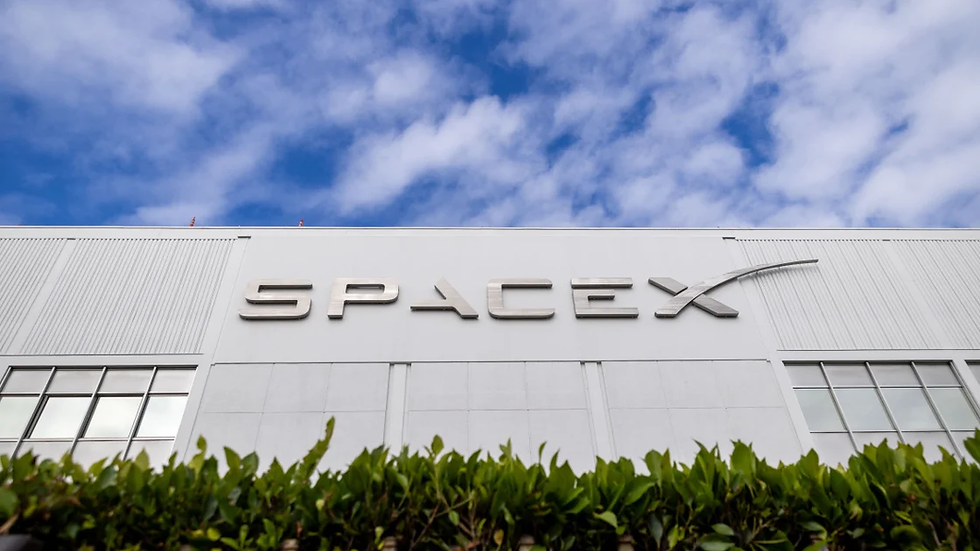
Elon Musk’s SpaceX is pushing far beyond rockets and satellites as the company aggressively expands into artificial intelligence through a stunning new agreement involving AI coding startup Cursor. According to reports, SpaceX has secured the option to acquire Cursor for an astonishing $60 billion later this year, marking one of the most ambitious moves yet in Musk’s growing attempt to build an AI empire capable of competing directly with OpenAI, Anthropic, Google, and Microsoft. The deal signals how rapidly the boundaries between aerospace, artificial intelligence, and global technology infrastructure are beginning to blur.
Cursor, founded by former MIT students, has quickly become one of the fastest growing AI startups in Silicon Valley thanks to its advanced coding assistant tools used by software developers worldwide. The platform allows programmers to generate, edit, and manage software code with the help of artificial intelligence, competing directly against products like GitHub Copilot, OpenAI Codex, and Anthropic’s Claude Code. Despite being only a few years old, Cursor reportedly reached more than $1 billion in annual recurring revenue while attracting major enterprise customers including some of the world’s largest technology companies. Its rapid growth helped push the company’s valuation close to $30 billion even before the SpaceX agreement emerged.
The structure of the agreement itself is unusually dramatic. According to reports, SpaceX now holds the right to either fully acquire Cursor for $60 billion later this year or instead pay approximately $10 billion for collaborative work if a final acquisition does not happen. The partnership centers around combining Cursor’s AI coding technology with SpaceX’s enormous computing infrastructure, particularly the Colossus supercomputer cluster tied to Musk’s broader AI operations. Executives involved with the partnership described the goal as building “the world’s best coding and knowledge work AI,” signaling ambitions extending far beyond simple software development tools.
The move also reflects the extraordinary transformation happening inside SpaceX itself. Originally focused almost entirely on rockets, satellites, and space exploration, the company has increasingly evolved into a sprawling technology empire connected closely with Musk’s artificial intelligence ambitions. Earlier this year, SpaceX absorbed xAI, Musk’s AI company behind the Grok chatbot, creating what some analysts now describe as an attempt to vertically integrate nearly every layer of the future AI economy. Through SpaceX, Musk already controls launch infrastructure, satellite networks, supercomputing resources, and massive quantities of data. Acquiring Cursor would add one of the most important AI coding platforms directly into that ecosystem.
One major reason the partnership matters so much is computing power. Training modern AI systems requires staggering amounts of infrastructure, including advanced Nvidia GPUs, energy resources, and data center capacity. Cursor executives reportedly admitted the company had become constrained by limited access to computing resources despite its rapid growth. Through SpaceX, Cursor gains access to Colossus, a supercomputer powered by hundreds of thousands of Nvidia chips and potentially scaling toward one million H100 equivalent GPUs. Analysts believe that infrastructure advantage could dramatically accelerate Cursor’s ability to compete against rivals like OpenAI and Anthropic in the increasingly important AI coding market.
The timing of the agreement is also significant because it arrives as SpaceX reportedly prepares for what could become one of the largest public offerings in history. Reports suggest the company is positioning itself not simply as a space exploration business but as a broader artificial intelligence and infrastructure giant with enormous long term growth potential. Investors increasingly view AI as the central economic story of the decade, and Musk appears determined to ensure SpaceX becomes deeply embedded in that future. Some analysts believe the Cursor deal could help strengthen SpaceX’s appeal ahead of its anticipated IPO by demonstrating the company’s ambitions extend well beyond rockets and satellite internet services.
The agreement also highlights the escalating race between technology giants scrambling to dominate AI powered coding tools, one of the fastest growing areas inside the broader artificial intelligence market. Developers are increasingly relying on AI systems to generate software, automate repetitive coding tasks, and even independently build applications. Companies capable of controlling those tools could eventually influence huge portions of the global software economy itself. Reports revealed that Microsoft had previously explored acquiring Cursor before SpaceX secured its deal, showing just how valuable the startup had become in the eyes of major tech players.
For Musk, the Cursor partnership represents something larger than another corporate acquisition. It reflects his growing belief that artificial intelligence, computing infrastructure, and even space technology will eventually converge into a single interconnected system. SpaceX has already discussed ambitious ideas involving orbital data centers powered by solar energy and satellite based computing infrastructure. Combined with AI coding systems like Cursor, those plans suggest Musk envisions SpaceX becoming not only the dominant company in space transportation but also a central force powering the future of artificial intelligence itself.


Comments