SpaceX's Starship Test Flight Ends in Mid-Air Disintegration
- Jun 1, 2025
- 2 min read
27 May 2025
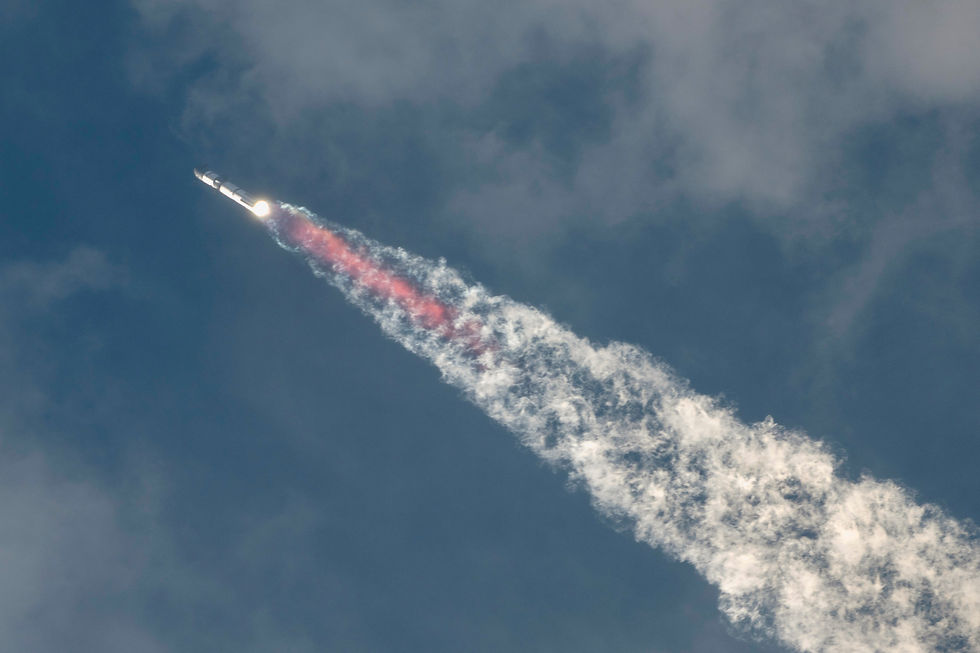
paceX's ambitious Starship program faced another setback as its latest test flight concluded with the vehicle breaking apart mid-air over the Indian Ocean. The 403-foot rocket, launched from Starbase in Texas, experienced a series of malfunctions that prevented the mission from achieving its primary objectives.
The launch marked the ninth test flight of the Starship system, which is central to SpaceX's plans for lunar and Martian exploration. Shortly after liftoff, the spacecraft began to spin uncontrollably, leading to its disintegration. Preliminary reports suggest that fuel leaks may have contributed to the loss of control. Additionally, a malfunctioning door prevented the deployment of mock satellites, one of the mission's key goals.
This test also featured the first use of a recycled booster in the Starship program. However, contact with the booster was lost during its descent, and it ultimately broke apart upon impact in the Gulf of Mexico.
Despite these challenges, SpaceX CEO Elon Musk characterized the test as a "big improvement" over previous attempts, which ended in explosions shortly after launch. Musk emphasized the progress made and expressed confidence in the program's trajectory, announcing plans for three more test flights in the coming months.
The Starship program is integral to NASA's Artemis mission, which aims to return astronauts to the Moon by 2027. NASA plans to use Starship to transport astronauts from lunar orbit to the Moon's surface and back. The success of these test flights is crucial for meeting the mission's timeline.
In preparation for future missions, SpaceX has been testing enhancements to the Starship's thermal protection system and catch fittings. These upgrades are designed to improve the vehicle's reusability and safety during re-entry. The company aims to refine these systems further in upcoming tests.
The Federal Aviation Administration (FAA) had recently cleared this test flight, expanding safety zones and adjusting launch times to minimize disruptions to air travel. The FAA's approval underscores the regulatory support for SpaceX's ongoing development efforts.
As SpaceX continues to iterate on the Starship design, each test flight provides valuable data to inform future improvements. While the recent flight did not achieve all its objectives, the insights gained will contribute to the program's advancement toward reliable, reusable space transportation.
The aerospace community and space enthusiasts worldwide are closely monitoring SpaceX's progress, recognizing the potential of the Starship system to revolutionize space travel and exploration. With continued testing and development, SpaceX aims to overcome the challenges faced in recent flights and move closer to its goal of enabling human missions to the Moon, Mars, and beyond



Comments