Union Workers at Boeing Reject Latest Contract Offer After Nearly Three-Month Strike

26 October 2025
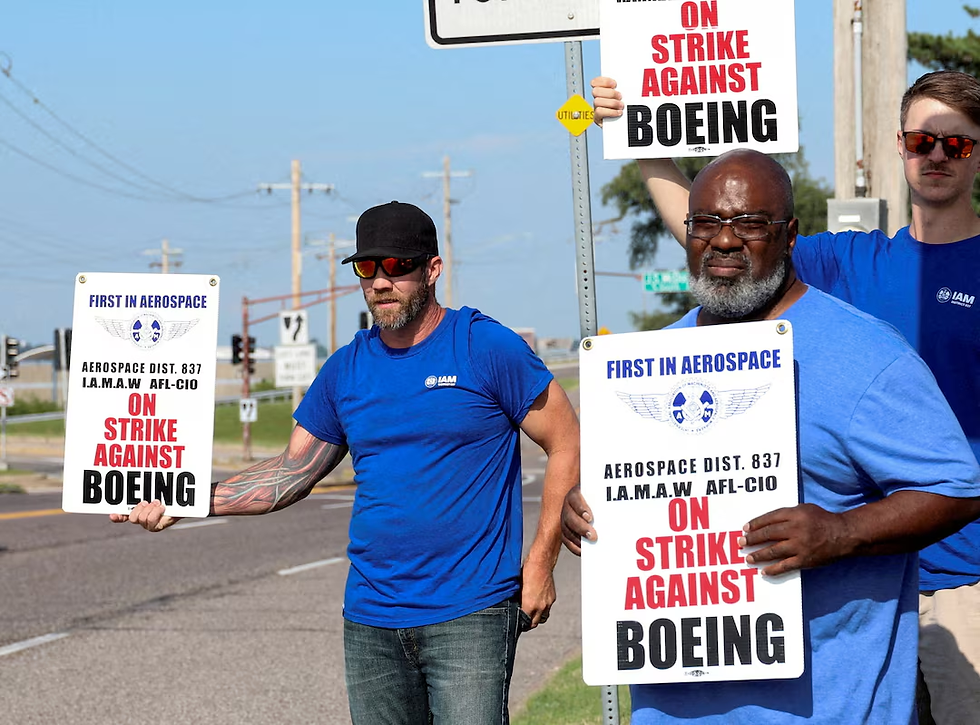
Workers at Boeing’s defence operations in the St. Louis area have dealt a fresh blow to the company’s contract negotiations after rejecting a new proposal offered by the aerospace giant. The vote by roughly 3,200 members of the International Association of Machinists and Aerospace Workers (IAM) District 837 came Sunday and marks the 13th week of a strike that began on August 4.
The contract on the table was a five-year agreement that, according to the union, mirrored earlier offers the workers had already turned down. IAM President Brian Bryant said Boeing management had failed to address the core concerns of the workforce and that the lack of meaningful change rendered the proposal unacceptable. “Boeing’s corporate executives continue to insult the very people who build the world’s most advanced military aircraft,” Bryant said.
The union estimated that its own counter-proposal would add about $50 million over four years an amount it considers modest given Boeing’s scale and the critical nature of the defence work involved. Meanwhile, Boeing CEO Kelly Ortberg is set to earn about $22 million this year, a fact the union raised in highlighting the imbalance between executive compensation and worker pay.
This strike has implications beyond labour relations. Boeing’s St. Louis operations are central to assembling fighter jets and other major defence systems for the U.S. military. Delays caused by the work stoppage have already affected the delivery schedule of the F-15EX fighter jet, according to testimony before the U.S. Senate.
From Boeing’s standpoint the strike and continued impasse present cost risks, production slowdowns and brand reputational damage. The company claims its contingency plans have mitigated some of the impact, but the longer the work stoppage persists the greater the risk of lasting disruption to aircraft production and supply-chain timing.
For the workers, the decision to reject the offer reflects deep-seated dissatisfaction with previous pay, benefits and retirement offerings. The union has long argued the current terms undervalue the specialised skills, clearances and responsibilities required of its members. By rejecting what Boeing called its “best and final” offer, the IAM signalled that a return to work will depend on significantly better terms.
The stalemate now raises several questions: how far Boeing is willing to move, how long the strike can be sustained without eroding worker solidarity or financial stability, and what role government-oriented pressure may play in pushing for a resolution given the national-security significance of the production involved.
In sum, the union’s rejection of the contract offer significantly extends the timeframe of the conflict. Both sides will now need to consider whether fresh concessions, mediation or more aggressive labour actions will mark the next phase of this defense-industry labour standoff.


Comments