Fed's First Rate Hike in Three Years Raises the Cost of Borrowing

WASHINGTON — The Federal Reserve raised its benchmark interest-rate range by a quarter percentage point Wednesday, lifting it to 3.75%–4.00% in the first increase since 2023. The unanimous decision was intended to push inflation back toward the central bank's 2% target. It also changes the price of money across the economy, with consequences that will reach credit cards, business loans, savings accounts, mortgages and corporate investment at different speeds.
The federal funds rate is an overnight rate between banks, not the number consumers see on a loan offer. Its influence moves through markets and bank pricing. Variable-rate credit cards and some home-equity lines often respond quickly, while fixed mortgage rates are shaped more directly by longer-term Treasury yields and investors' expectations. A Fed increase can therefore make borrowing more expensive without producing the same quarter-point change in every product.

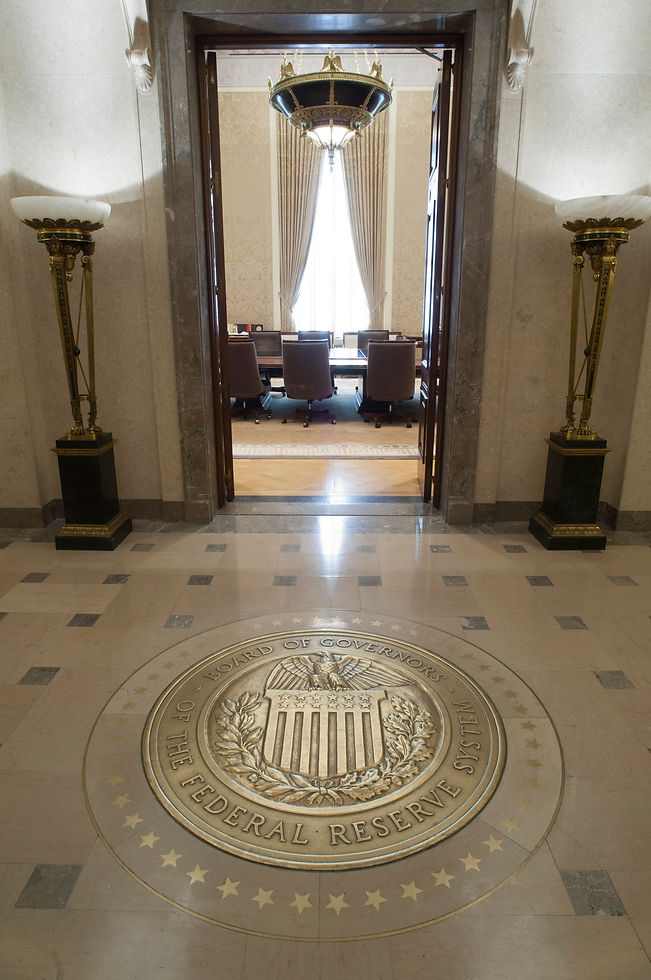
Photo: Board of Governors of the Federal Reserve System · Public domain
For businesses, the effect depends on balance-sheet structure. A company with fixed long-term debt may feel little immediate change. A smaller firm renewing a line of credit, financing inventory or leasing equipment can face a higher monthly cost almost at once. Projects that looked profitable under cheaper financing may be delayed, scaled back or rejected. That restraint is part of how monetary policy cools demand, but it can also slow hiring and expansion.
Savers are on the more favorable side of the move, at least in principle. Banks and money-market funds may raise yields on deposits and short-term instruments as market rates rise. The increase is not automatic, and institutions often adjust deposit rates more slowly than loan rates. Consumers should compare annual percentage yields and account terms rather than assume every bank will pass the full benefit through.
The Fed acted because inflation remains elevated, while officials described economic activity, spending, productivity and capital investment as solid. That combination made the case different from an emergency increase during a collapsing economy. Policymakers are trying to reduce price pressure before expectations drift higher, even though the same move can make housing, automobiles and working capital harder to afford.
The central bank also signaled that another increase could come later this year. That guidance matters because markets price a path, not just a single meeting. If investors expect further tightening, Treasury yields and corporate borrowing costs can rise before the next vote. If inflation data improve, those expectations can reverse. Businesses should stress-test several rate scenarios instead of treating one projection as guaranteed.
Politics will remain part of the public debate, but the economic mechanism is clearer than the rhetoric. Higher rates reduce demand by rewarding saving and making financed purchases more expensive. They do not directly produce oil, housing or imported goods. When inflation comes from energy shocks or supply constraints, the Fed must decide how much restraint is necessary to prevent those costs from spreading without overreacting to forces it cannot control.
BizzNews recently examined the Senate's debate over the Clarity Act, where legal rules could reshape digital-asset markets. The rate decision is a broader form of rule-setting: it changes the hurdle every borrower and investor uses. It also lands against a consumer-spending picture that has remained larger than a year earlier despite monthly volatility. Resilient demand gives the Fed room to act, but it does not mean every household can absorb higher interest expense.
Companies can respond by reviewing floating-rate exposure, refinancing calendars, cash reserves and the return required for new projects. Households can prioritize high-rate revolving debt and shop carefully for deposit and loan terms. None of those steps eliminates the macroeconomic risk. They reduce the chance that an expected policy adjustment becomes an avoidable financial shock at the individual level.
The next decisive information will come from inflation, employment and wage data. One increase does not guarantee that prices return to target, and one difficult month does not guarantee a long hiking cycle. The Fed has raised the cost of money because it believes waiting carries a greater inflation risk. Borrowers and businesses now have to plan for that new price while watching for evidence that the policy is working.


Comments